
How Much Does It Cost to Make a Website in Sydney?

In today’s digital age, having a website is not just a luxury; it’s a necessity. Whether you’re a small business owner, a freelancer, or a large corporation, a well-designed website can significantly boost your online presence and help you reach a wider audience. But one of the first questions that come to mind when planning a new website is: How much does it cost to make a website? If you’re looking to create a website in Sydney, this comprehensive guide will break down the various costs involved. Factors Influencing Website Costs Design Complexity The complexity of your website design can greatly impact the overall cost. Simple, clean designs are generally more affordable, while intricate, custom designs with unique graphics and animations will cost more due to the additional time and effort required. Functionality and Features The functionality you need on your website is another major cost factor. Basic websites with standard features like contact forms and photo galleries are cheaper, while advanced functionalities such as e-commerce capabilities, booking systems, and membership portals will increase the cost. Content Creation Quality content is crucial for any website. This includes text, images, videos, and other multimedia elements. Hiring professional content creators can add to your costs but ensures that your website is engaging and effective. Maintenance and Updates Regular maintenance and updates are essential to keep your website running smoothly and securely. These ongoing costs should be factored into your overall budget. Types of Websites and Their Costs Static Website Definition and Typical Uses: Static websites are simple, with fixed content that doesn’t change unless manually updated. They are ideal for small businesses, portfolios, and informational sites. Cost Breakdown: For a static website with 4-8 pages, you can expect to pay between $250 – $300, averaging around $40 – $50 per page. Dynamic Website Definition and Typical Uses: Dynamic websites display different content based on user interactions or other variables. These sites are suitable for blogs, news portals, and other interactive platforms. Cost Breakdown: A dynamic website with 4-8 pages typically costs between $500 – $800, with a per-page price of $80 – $100. Corporate Website Definition and Typical Uses: Corporate websites are larger and more complex, designed for businesses that need to present a professional image and provide comprehensive information about their services. Cost Breakdown: The cost for a corporate website with 12-20 pages ranges from $1000 – $2000, with a per-page price of $70 – $100. Customized Website Definition and Typical Uses: Customized websites are tailored to the specific needs and preferences of the client, often including unique features and designs. Cost Breakdown: These websites, with 20-25 pages, can cost anywhere from $2000 – $5000, averaging $100 – $150 per page. Blogging Website Definition and Typical Uses: Blogging websites are designed for content creators to publish articles, videos, and other media regularly. Cost Breakdown: A typical blogging website with around 10 pages costs between $500 – $1000, with a per-page price of $30 – $100. Shopify Website Definition and Typical Uses: Shopify websites are specifically for e-commerce businesses, offering a platform to sell products online. Cost Breakdown: The cost for a dynamic Shopify website ranges from $1500 – $5000, with a per-page price of $100 – $200. Portal Development Definition and Typical Uses: Portal development involves creating web portals that provide access to a variety of resources and services, such as news, emails, and online shopping. Cost Breakdown: The cost for developing a dynamic portal can range from $5000 – $25000, with a per-page price of $100 – $200. WordPress Website Definition and Typical Uses: WordPress is a versatile platform suitable for blogs, business sites, and online stores. Cost Breakdown: WordPress websites can cost between $500 – $5000, with a per-page price of $40 – $100. WooCommerce Website Definition and Typical Uses: WooCommerce is a WordPress plugin that adds e-commerce functionality to a WordPress site. Cost Breakdown: The cost for a dynamic WooCommerce website ranges from $1000 – $5000, with a per-page price of $80 – $120. Additional Costs AWS Management Services Offered: AWS management includes cloud hosting, data storage, and server maintenance. Cost Details: The cost for AWS management support is typically between $300 – $500. Domain Cost Importance of a Domain Name: A domain name is your website’s address on the internet, making it crucial for branding and accessibility. Cost Details: Domain costs can range from $1500 – $5000 per year. Hosting Different Hosting Options: Hosting services include shared hosting, VPS hosting, and dedicated servers. Cost Details: Hosting costs vary from $100 – $500 per year. Business Email Options and Benefits: Professional business email services enhance communication and credibility. Cost Details: Basic business email services cost around $150 per year, while G-Suite options can go up to $5000 per year. SSL Certificate Importance of SSL: An SSL certificate secures data transfer between the user and the website, which is essential for security and SEO. Cost Details: The annual cost for an SSL certificate is around $50. CSS Founder: The Best Website Designing company in Sydney Introduction to CSS Founder CSS Founder is a premier website designing company in Sydney, known for its innovative and client-focused approach to web design. The vision of CSS Founder is ‘Website for Everyone‘ which means that from India to the US, any individual, rich or poor, irrespective of their background, business & class should have a website. Why Choose CSS Founder Choosing CSS Founder means partnering with a team of experts dedicated to creating visually appealing and highly functional websites tailored to your needs. CSS Founder offered a website calculator, where you can automatically calculate total cost in website development without any hessle. Services Offered CSS Founder offers a wide range of services, including: Custom website design and development E-commerce solutions Website maintenance and support SEO optimization Content creation Conclusion Creating a website in Sydney involves various costs, depending on the type of website and the features you need. From static websites to complex dynamic portals, understanding these costs can help you budget
AI Vs Website Builder: The Future of Website Development

In the rapidly advancing world of technology, artificial intelligence (AI) has emerged as a disruptive force, transforming numerous industries and sparking debates about its potential impact. One area where AI’s influence is particularly intriguing is the realm of website building. As AI capabilities continue to expand, many are questioning whether this cutting-edge technology will eventually render traditional website builders obsolete. To better understand this complex issue, let’s delve into the current landscape and explore the strengths and limitations of both AI and website builders and who will dominate the future of website development. The Rise of AI in Web Development AI has already made significant strides in web development, revolutionizing various aspects of the process. Machine learning algorithms have proven invaluable in analyzing vast amounts of data, identifying patterns, and providing insights that can enhance user experiences. These algorithms can learn from user behavior, preferences, and interactions, enabling the creation of more personalized and intuitive websites. Furthermore, AI-powered tools have streamlined development workflows by automating repetitive tasks, such as testing and code generation. This automation not only reduces the workload on human developers but also minimizes the potential for human error, resulting in more efficient and reliable development processes. However, it’s crucial to recognize that AI, despite its remarkable capabilities, is not a panacea. While it excels at specific tasks, it still lacks the creativity, intuition, and high-level decision-making abilities that human developers possess. Website builders, on the other hand, were designed to cater to a different need – providing a user-friendly platform for individuals and businesses to create visually appealing and functional websites without extensive coding knowledge. The Enduring Strengths of Website Builders Website builders have gained immense popularity due to their accessibility and ease of use. Platforms like Wix, Squarespace, and Weebly offer drag-and-drop interfaces, pre-designed templates, and a wide range of customization options. These tools have democratized website creation, empowering users with varying levels of technical expertise to create professional-looking websites without the need for extensive coding knowledge. One of the key advantages of website builders is their ability to simplify the website creation process. Users can focus on the visual aspects and content, while the platform handles the underlying technical aspects, such as hosting, security, and responsive design. This approach lowers the barrier to entry, making it easier for small businesses and individuals to establish an online presence without significant investment in technical resources. Additionally, many website builders offer integrated e-commerce solutions, allowing businesses to seamlessly set up online stores and sell their products or services. This integration eliminates the need for complex third-party integrations, further simplifying the process for non-technical users. The Potential Symbiosis of AI and Website Builders While AI may not entirely replace website builders in the near future, the integration of AI capabilities into these platforms could enhance the user experience and functionality in numerous ways. For instance, AI-powered design assistants could analyze a user’s preferences, business goals, and industry trends, and automatically generate visually appealing and optimized website layouts. Furthermore, AI could be leveraged to improve website performance and search engine optimization (SEO). By analyzing user behavior data and search patterns, AI algorithms could suggest content optimization strategies, ensuring that websites are more discoverable and engaging for visitors. Moreover, AI-driven chatbots and virtual assistants could be integrated into websites, providing 24/7 customer support and improving the overall user experience. These AI-powered tools could answer frequently asked questions, guide users through the website, and even assist with simple tasks like scheduling appointments or processing orders. The Future of Website Building: A Collaborative Approach As AI continues to advance, it’s unlikely that it will completely replace website builders. Instead, a more plausible scenario is one where AI and website builders coexist and complement each other, leveraging their respective strengths to create a more seamless and efficient website building experience. Website builders will likely adapt and incorporate more AI capabilities to remain competitive and meet the evolving needs of users. Failure to do so could result in these platforms becoming obsolete or overshadowed by more advanced AI-driven solutions. However, by embracing AI, website builders can offer users the best of both worlds – the ease of use and accessibility of traditional website builders, combined with the power and intelligence of AI-driven tools. Ultimately, the future of website building will involve a seamless integration of human creativity and AI capabilities. While AI may automate certain tasks and enhance the overall process, human developers and designers will still play a crucial role in crafting unique and engaging digital experiences tailored to specific business requirements and user preferences. Conclusion In the ongoing debate surrounding AI’s potential to replace website builders, it’s evident that a complete replacement is unlikely in the near future. Instead, the two technologies are poised to coexist and complement each other, creating more efficient, personalized, and user-friendly solutions for building websites. The true power lies in striking the right balance between leveraging AI’s capabilities and harnessing human creativity and expertise. By combining the strengths of AI and website builders, businesses and individuals can benefit from streamlined processes, enhanced user experiences, and the ability to create truly unique and captivating online presences. As the tech landscape continues to evolve, it will be fascinating to witness the innovative ways in which AI and website builders collaborate, pushing the boundaries of what’s possible in the realm of website creation and online experiences.
10 Reasons Why You Should Use a Website Builder for Your Online Business
In today’s digital era, maintaining an online presence is essential for businesses of any size. However, creating a website from scratch can be challenging, particularly for those without technical skills. This is where website builders come into play, offering a user-friendly and cost-effective solution for creating a professional-looking website. In this article, we’ll explore the numerous benefits of using a website builder for your online presence. Ease of Use One of the primary advantages of website builders is their ease of use. These platforms are designed to be intuitive and user-friendly, allowing even those with little to no coding knowledge to create visually appealing websites. With drag-and-drop interfaces and pre-designed templates, website builders simplify the process of building a website, making it accessible to anyone. Cost-Effective Solution Hiring a professional web developer or agency to create a website can be expensive, especially for small businesses or individuals with limited budgets. Website builders offer an affordable alternative, often providing free or low-cost plans with a range of features. This cost-effectiveness makes it possible for businesses to establish an online presence without breaking the bank. Professional Design Templates Website builders come equipped with a vast selection of professionally designed templates that cater to various industries and purposes. These templates are created by experienced designers, ensuring that your website looks polished and visually appealing from the outset. With a wide range of customization options, you can easily tailor the design to match your brand’s identity and create a unique online presence. Mobile Responsiveness Mobile responsiveness is crucial aspect for website . Website builders understand this importance and offer responsive design features that ensure your website looks and functions seamlessly across various devices, including smartphones and tablets. This mobile responsiveness enhances the user experience and helps to attract and retain visitors. Search Engine Optimization (SEO) Features Many website builders integrate SEO tools and features to help improve your website’s visibility on search engines like Google. These features may include optimized page titles, meta descriptions, alt text for images, and the ability to customize URLs. By leveraging these SEO tools, you can increase your chances of ranking higher in search results, driving more organic traffic to your website. E-commerce Capabilities If you plan to sell products or services online, website builders often provide e-commerce functionality. This allows you to set up an online store, manage inventory, accept payments, and track orders without the need for extensive coding or third-party integrations. These e-commerce capabilities streamline the process of selling online and provide a seamless shopping experience for your customers. Blogging and Content Management Maintaining a blog or regularly updating your website’s content is crucial for engaging with your audience and improving your search engine rankings. Website builders offer built-in blogging and content management systems (CMS) that make it easy to create, publish, and organize your content. This feature ensures that your website remains fresh and up-to-date, improving user engagement and SEO performance. Analytics and Insight Many website builders provide built-in analytics tools that allow you to track your website’s performance, visitor behavior, and other valuable insights. These analytics can help you make data-driven decisions and optimize your website for better results. Additionally, some website builders offer integration with popular analytics platforms like Google Analytics, providing even more detailed insights. Scalability and Growth Potential As your business grows and your online presence expands, website builders offer scalability options to accommodate your changing needs. You can upgrade to more advanced plans or add additional features and functionality without having to start from scratch. This scalability allows your website to evolve alongside your business, ensuring a seamless transition and consistent online presence. Customer Support and Resources Website builders understand that not everyone is a tech expert, so they provide various customer support channels and resources to assist users throughout the website-building process. This may include knowledgebases, tutorials, community forums, and customer support teams available via email, chat, or phone. Having access to these resources can help ensure a smooth and successful website-building experience. In conclusion, website builders offer a comprehensive solution for businesses and individuals looking to establish or enhance their online presence. With their ease of use, cost-effectiveness, professional design templates, mobile responsiveness, SEO features, e-commerce capabilities, content management tools, analytics insights, scalability, and customer support, website builders empower users to create visually appealing and functional websites without extensive technical knowledge or resources. Embrace the benefits of website builders and take your online presence to new heights.
Website Builder vs Web Developer: Which Is Right for Your Business?
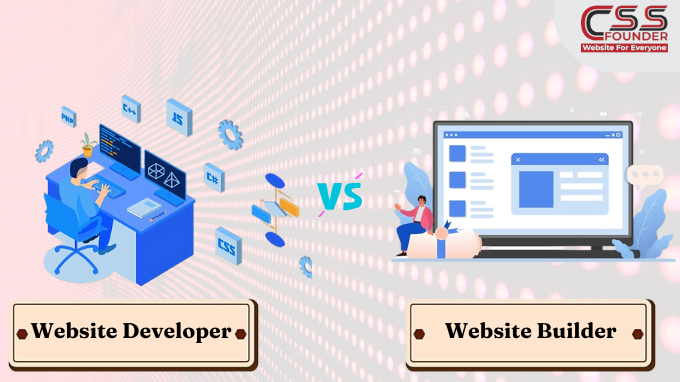
When it comes to getting a website for your small business or startup, you have two main options: use an online website builder platform, or hire a professional web developer. Both paths will get you a functioning website at the end, but they differ significantly in terms of cost, ease of use, flexibility, ownership, and long-term scalability. In this article we shall discuss which is right for your business Website Builder vs Web Developer Website Builders: The Easy, Budget-Friendly DIY Option Website builders like Wix, Squarespace, Weebly and others have exploded in popularity by allowing anyone to build a professional-looking website themselves through a user-friendly drag-and-drop interface. No coding skills is needed to learn. The main appeal of website builders is convenience and ease of use. You simply choose from hundreds of pre-built website templates, then customize the layout, pages, text, images and other elements using the visual editor. Most builders also include e-commerce functionality to set up an online store and accept payments. From a cost perspective, website builders are extremely affordable. Many offer free plans to get started, with upgraded plans that remove third-party ads and unlock more features typically costing between $10-$30 per month. This low-cost model makes website builders very accessible for cash-strapped small businesses and solopreneurs. However, this convenience and affordability comes with some significant trade-offs in terms of flexibility, customization, and control: Limited Design Flexibility While modern website builders allow you to tweak colors, fonts, layouts and more, you are still largely confined to the look-and-feel and core structure defined by that specific theme or template. There are only so many customizations you can make before hitting a ceiling. Restrictive Functionality Most website builders offer integration with common third-party services like Google Analytics, live chat, email marketing tools and more. But overall, you are limited to just the apps, plugins, and features supported by that specific builder platform. Lack of Ownership When you build on a website builder, you don’t actually own the source code for that website. The code belongs to the builder company, which means if they went out of business or made major pricing changes, you could be stuck with limited options to take your site elsewhere. Website Developers: Ultimate Flexibility and Control (At a Cost) On the other end of the spectrum, hiring an experienced web developer or agency gives you a fully customized website tailored precisely to your unique needs and specifications, with no constraints or limitations. Rather than working off templates, the developer will code your entire website completely from scratch.With a custom website, you have unlimited flexibility in terms of: Design The look, layout, and visuals can be designed and built to your exact requirements, not dictated by pre-built templates. Functionality Any specific features, tools, e-commerce integration needs can be developed and coded into your website as required. Optimization From page load speed to SEO best practices, a developer can optimize every aspect of your custom website. Scalability As your business grows, a custom coded website can much more easily evolve and scale via new functionality, add-ons, and upgrades. Of course, this incredible flexibility comes at a cost – generally anywhere from a few thousand dollars for a basic coded site, up to $10,000, $30,000 or more for a highly customized, complex website developed by an agency. But for many established businesses willing to make the investment, a custom coded site is worth the premium price for the unlimited potential. Other Factors When Choosing Builders vs Developers Cost and flexibility are the biggest factors, but there are a few other considerations to keep in mind: Control and Ownership Since you fully own the code for a custom developed site, you have full control to make changes, move hosting providers, and run it as you wish. With website builders, that code belongs to them which limits your ability to make drastic changes or moves. Ongoing Work and Maintenance Website builders handle all core software updates, security patches, and other backend work automatically. This is convenient but also means you’re at the mercy of that platform’s policies and pricing. Custom coded sites require more hands-on technical work and active maintenance from you or the developer to keep everything updated and secure over time. So in summary, using an online website builder is definitely the faster, easier, and much more affordable option for getting a website up and running quickly. The trade-off is being confined to the limitations and walled garden of that specific builder platform. Hiring a web developer gives you full flexibility to create any custom website you can dream up, along with unlimited scalability for future growth. But of course, this maximum control and versatility comes at a much higher investment of time and money. Conclusion The right choice for your business will depend on your specific needs, goals, technical requirements, and budget. Many businesses start with a website builder while getting established, then graduate to a custom developed solution as they scale. But there’s no one-size-fits-all here – carefully evaluate your priorities to choose the best approach.