
What Are The Important Technical SEO Terms?

When we speak about search engine optimization (SEO), keyword research, link building, Meta titles, and Meta descriptions are the first things that spring to mind. They are, without a doubt, highly vital on-page features and terms in driving organic traffic by SEO Agency in Gurgaon to your website. However, they should not be the only terms of your performance you are concerned about improving. Where do we stand with the technical SEO terms? Your Site’s page speed, mobile optimization, and UX design matter no more negligible. While they are not directly responsible for bringing organic traffic to your website, they make it simpler for Google to scan your website and index your pages. In any case, who user would remain on your website if it loads at such a snail’s pace? These terms, and many more besides, are included in the terms of technical SEO, which are the terms that take place behind the scenes. In addition, we will discuss everything relevant to your understanding of technical SEO and its many facets. What Is Technical SEO? Simply put, “technical SEO” refers to search engine optimization’s “technical” terms. It simplifies search engines’ processes to discover, crawl, and index your website. It improves your website’s rankings and exposure, in addition to the non-technical terms of SEO. Additionally, technological optimization may make navigating your website simpler for visitors, encouraging them to remain on your site for longer. Why You Should Be Concerned About Technical SEO? To put it another way, solid technical SEO by PromoteDial SEO Company in Gurgaon is the basis for all your other SEO operations. If you do not have it, search engines will not be able to locate your website, and you will not be included in the results of any searches. Terms Of Technical SEO Website Structure According to the best Website Designing Company in Delhi, Let’s start with the framework, shall we? It’s possible that many of you won’t consider this to be the primary factor that determines how your sites get indexed. The fact is that a poorly structured website is the root cause of many crawling and indexing troubles. The Architecture Of The Site It is recommended that your website have a “flat” structure. It indicates that none of your pages should be more than a couple of links distant from one another. This will increase the likelihood that Google will crawl all of your pages and that they will be readily discovered. Responsive Design According to the best Website Design Company in Bangalore, there is certainly no use in going into detail about how important it is to have a website compatible with mobile devices. It doesn’t matter whether you run an online store or a blog; your website has to be mobile-friendly to be successful. XML Sitemap A sitemap is a list of all the pages included on a website. It functions as the website’s map. Google can undoubtedly locate pages by following the connections present on each page. However, sitemaps continue to be one of the essential sources when it comes to locating URLs. Internal Linking While internal linking may not seem to be a component of technical SEO via SEO Agency in Gurgaon, it is nevertheless essential to bring it up in this context. If you have a flat structure, it shouldn’t be an issue. The pages far from your homepage should be three to four links deep and include connections to other sites.
How No-Index meta tags work?
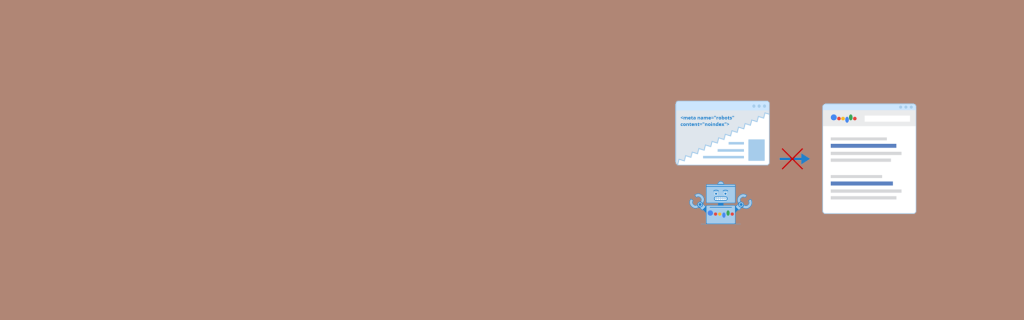
Noindex meta tags refer to those meta robot tags which direct the search engine not to include the search pages in the search results. Noindex can be done by adding a tag to the head section of the HTML or the reaction of the headers. But the search engine needs to be instructed disallowing the information in the robots.txt.file. When you block your page with the robots.txt.file, google will never receive your no index tag and the searched page will keep appearing. An example of a noindex meta tags are <meta name=”robots” content=”noindex, follow”> And as an alternative to the noindex tag, X robots tags can be used in the HTTP reader. Usage of noindex in robots.txt.file If you are accessing the robots.txt.file, you can noindex lots of pages in one go. And it’s the quickest and easiest way of doing so. If noindex page is put in robots.txt.file, the example of it are Noindex:/robots-txt-indexed-page/ But when you are using noindex tags you need to make sure that the tag will not be directed to a vulnerable page which can be removed from the search engine results. This can also make various new old websites to stop crowding from the users. Noindex meta tags will act as the meta robots or response headers which enables users not to index the real page or current page but the link page will be crawled in meta robot tag. Mostly noindex is used for laminated listing pages. With noindex meta tags, you can utilise granular specific pages to control individual page indexing and to be presented in the Google search results. Name attributes values will be a specification for the directive app that is the crawler. You will address the value name and crawler name for a specific crawler. With this article, you must have got an idea of how a noindex meta tag works and how useful it is. If you want to improve the SEO ranking, you need to know about the index and it’s working. No index meta tags will direct google and it’s search page about how to use it. Here the value name and the content attribute both are non-sensitive cases. Search results will have different crawlers for different properties and purposes. For google web search results but now show in google news. Know More: Website Designing Company in Mumbai
Understanding Functions In Programming

Functions are “self-contained” code modules that fulfil a particular mission. In general, functions “take in” data, process it, and “return” the output. It can be used over and over and over again once a function is written. Functions can be “called” from other functions within. A mission is encapsulated by functions (they combine many instructions into a single line of code). Many programming languages have many built-in functions that would otherwise require many steps to be taken, such as the calculation of a number’s square root. Generally speaking, we don’t care how a position does what it does, just that it does it. So the “flow of control” of a function is: The programme enters a line of code containing a “function call”. Entering the function is the programme (starts at the first line in the function code). From top to bottom, all instructions inside the feature are executed. The software leaves the feature and returns to where it began from. Any data computed and RETURNED by a function is used in the original line of code instead of the function. Benefits of Writing Functions They cause us to conceive as a bunch of sub-steps of our programme. (Each sub-step can be a function of its own. Just split the overall programme into sub-steps when every programme seems too hard!) They allow us, instead of rewriting it, to reuse code. Functions allow us to clean our variable namespace (local variables only “live” as long as the function does). In other words, function 1 can use a variable called I and a variable called I can also be used by function 2 and there is no misunderstanding. Each I variable exists only when the given function is executed by the computer. Functions allow us, in isolation from the rest, to test small parts of our software. In interpreted languages, including Matlab, this is particularly true, but can be useful in C, Java, ActionScript, etc. Steps to Writing a Function Understand the function’s meaning. Define the data that comes from the caller into the function (in the form of parameters)! To achieve its objective, define what data variables are required within the function. Decide on the collection of steps to achieve this purpose that the software would use. (An Algorithm) The good aspect about functions is that they have many names that are common. They are called differently in various programming languages, such as functions, methods, sub-routines, procedures, etc. If you come across some words like that, then just think about the same idea. All the theoretical concepts can be easily understood by you when got connected with a best and reputed Website Designing Company in Mumbai, CSS Founder. Our professionals and experts will guide you with the most recent and new technology-based IT services and programming function in this epidemic.
How to create a simple website by yourself?

Websites play a crucial role in any business to make them grow. As the world is becoming digitized where everything is available online, beating with different competitors and winning is another level of success. According to a survey, more than 200 million active websites are available and used by thousands of people regularly to get the most precise information. Even in the tough situation from which a world is going through i.e corona, websites help most people for giving them employment, for shopping for necessities and more. But it’s also important to build a well-established website to grow the business or brand in the digital platforms. In this article, you will get to know how to create a website for your business. Steps of building a simple website Choose the correct right builder – Various website developers or creators are famous nowadays to establish a website. But among these, you need to choose the best one for yourself. You can choose Wix, Squarespace, Weebly, WordPress, and other Website Design Company in Dubai and India to build your website. Sign up for a plan which fits your budget – After you have selected your website builder platform, the next step which you need to opt is for signing in to the website developer. Like if you want a simple website, a cheaper plan will work effectively whereas for complex websites you need to choose the expensive one. Choose your domain name – Now you need to decide your domain name, but make sure that the domain name needs to be attractive and eye-catchy so that it might attract the viewer’s eyes. Don’t go for a domain name, which various persons are using, always choose a unique domain. Choose the design template – After choosing a domain name, the most interesting fact or thing that came is choosing your template and theme of your website. You can search for various template and theme designs on the website developer platform. This way, you can make your website beautifully designed with attractive features, themes, colours, fonts and pictures. After this, you are somewhat ready to launch your website.